
Weeds Be-gone
Weeding is not hard. It is easy and is an integral and necessary part of gardening. Make them your friends – they type of friends you want to never see again.
How to Keep the Weeds Away
1. For the areas where Astroturf is not used and the areas where Astroturf will be removed, a thick layer of cardboard, with sheets overlapped by 12 inches and a 4-inch thick layer of leaves or pine needles over the cardboard will immensely help. Save all your big and medium size boxes for this use.
2. Meanwhile, dig the weeds thoroughly before putting the cardboard and pine needles on top.
3. Survey your bed and aisles every time you are at the garden. As weeds appear, dig or pull them out. Don’t wait. Do it when first noticed. (Carry a hand trowel with you at all times.)
Common Weeds and How to Remove
Following is a guide to weeding. It lists and shows pictures of common weeds that have been seen in the garden. It instructs how to remove each type weed.
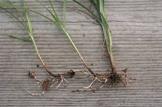
| Yellow Nutsedge – Nutsedge spreads by underground runners, with nuts connected to the runners. In order to get rid of the nutsedge: 1. Never pull it. 2. Dig deep with a hand trowel or shovel. 3. Follow the underground runner from one above ground sprout to the next and the next. Take it out (nuts and all) without breaking the runner. 4. Be methodical. Take your time. 5. There is rarely 100% success the first time digging it out, even though it seems like it’s all gone. When it comes back, from nuts that were missed, repeat the removing process. 6. Less and less will appear each time. In a matter of a month or so, it will all be gone. |
 |
| Spotted Spurge – It can be removed by pulling, if the soil is moist. Otherwise, use a hand trowel and it will come out easily. The entire root needs to come out. The key is to remove spurge before it forms seeds that will drop and introduce hundreds of new spurge plants. This is a plant whose seeds you will not see until it is too late. Remove immediately when it is small. | 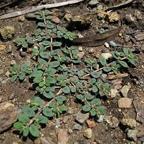 |
| Crab Grass – Use a hand trowel. It’s easy to remove. If the soil is damp, you can pull it without a trowel. The key is to get the roots. | 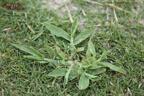 |
| Bermuda – Use a hand trowel or shovel. Must get all the root or it will be back. | 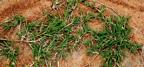 |
| Henbit – Easy to remove by pulling unless the soil is dry. Then a hand trowel will be needed. | 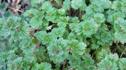  |
| Cudweed – Easy to remove by pulling unless the soil is dry. Then a hand trowel will be needed. | 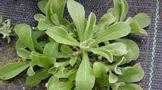 |
| Carpet weed – Easy to remove by pulling unless the soil is dry. Then a hand trowel will be needed. | 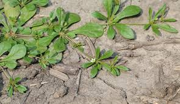 |
| Hawksbeard (there are many different Hawksbeards) – Easy to remove by pulling unless the soil is dry. Then a hand trowel will be needed. | 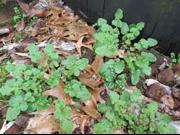 |
| Doveweed – Use hand trowel to remove. | 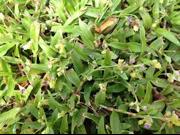 |
| Mulberry weed – Easy to remove by pulling unless the soil is dry. Then a hand trowel will be needed. | 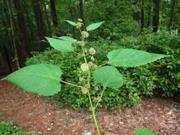 |
| Purslane – Must dig deep with a hand trowel or shovel in order to get the roots. Otherwise, it will be back in a few days. | 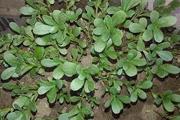 |
| Common Chickweed – Early spring weed that needs a gentle hand trowel to remove. | 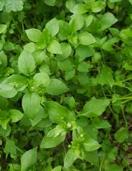 |
| Carolina Geranium – pulls out easily in moist soil. | 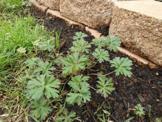 |
| Amaranth – You may not think of amaranth as a weed, and in fact it is wonderful as an edible leaf. But, if allowed to go to seed, which it does quickly, the result will be thousands of amaranth weeds. Grow but be prepared to cut seed stalks as soon as they shoot up. | 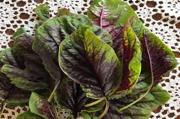 |
There are many other weeds in the garden, most of which are easily removed by a tiny effort with a hand trowel. The key is to get them before they form seed or form a huge network of runners.