
Crop Rotation
Rotating your planting scheme is one of the things that hasn’t really gotten a lot of discussion yet, but everyone should give it some serious consideration this year. Different plant families use up different things from the soil, are attractive to different pests, harbor different diseases, etc. Crop rotation helps address these issues and keep your gardens productive.
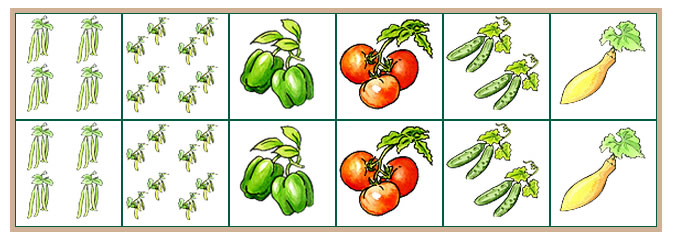
Wherever you planted okra, tomatoes, peppers, eggplants, squash, cucumbers, or basil last spring/summer should be planted to beans or flowers or something else this year that has different nutrient needs and doesn’t provide a host for the same soil-dwelling pests, particularly root-knot nematodes. Find the thread(s) from a few weeks back on the root-knot nematode issue and begin to plan accordingly.
Keeping a planting map of your bed in a notebook is a workable alternative to plant markers in the garden bed and helps you track your rotation schedule. Sketch out what you planted and when and where and even how many if you are so inclined. (You can also record germination failures on your piece of paper and re-plant dates.) Making note of which varieties produced well – and which varieties were well-received in your household versus those that no one liked – will help you plan for the next year. Always include the season (spring, summer, fall, winter) and the year.
A long time ago, we took grease pencils and marked the concrete blocks at the 1/4, 1/2, and 3/4 points along the side of our bed, giving us 4 “sub-beds” in the bed to use in our rotation planning. The marks lasted for a couple of years, long enough for us to get used to the general divisions, and now we just eyeball the section boundaries.
If we are really organized, we do all of this in a spiral in which we keep gardening info. More often, though, it gets scribbled on a scrap of paper that then gets taped in the spiral or paper-clipped to a page (or even just slid into the spiral). The most important thing is that you have a record and a place to find it.