
|

Radishes

radishes
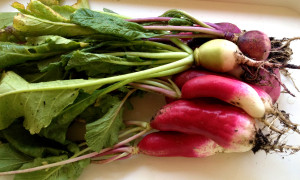
Easter Egg and French Breakfast radishes

Ever wonder what to do with those huge radishes that seem to want to grow above the ground? Did you know you can cook them? I’ve tried steaming them and serving with salt, pepper, and butter–yummy! Sort of like a mild turnip. And they can be sliced thinly and sauteed with other fresh veggies for a mixed vegetable dish–season as you like. Does anyone have other ideas?

Similar Posts

  • |

    Summer Bounty: Figs

    One of the best sweet treats for summer are figs. At Westbury Community Garden we have four varieties of figs. They are Banana figs (large yellow), LSU Purple (purple, teardrop-shaped), Celeste (large, light purple/brown), Petite Negra (small dark purple/black, teardrop-shaped). There is an early harvest in May and the main harvest in June – August….

  • | |

    Plan Your Fall Garden – Get Seeds Now

    Seed packets are ready for purchase! Do you have yours yet? The seeds have been chosen by gardeners who have years of experience growing in the Houston climate. There are 40 varieties of vegetables in this year’s seed packet. The cost is $12. If purchased individually the seeds would cost over $100. In addition to…

  • Patty’s Pickle Recipe

    A fun way to enjoy and share your cucumber abundance is to make homemade pickles! Here is a simple recipe I’ve pulled together after reviewing pickling methods and recipes online. I choose to make all my recipes sugar and preservative free. Note, these pickles must be stored in the refrigerator because they are not put in…

  • | |

    Black Rot Disease in Brassicas

    What is it? Black rot is a bacterial infection that affects the vascular system of members of the Brassica (broccoli) family. It is caused by the bacterium Xanthomonas campestris pv. campestris. Which plants are affected? All cruciferous crops are susceptible including arugula, bok choy, broccoli, Brussels sprouts, cabbage (including Chinese cabbage), cauliflower, collards, garden cress, kale, kohlrabi, mustard (including mizuna), radish, rutabaga, and turnip. NOT AFFECTED seems to be nasturtium (it must be far enough away on the family tree). Where did it come from? We don’t know the origin of our current outbreak. The bacterium infects all parts of host plants, including seeds, so it could have come in on a seed or on a commercial transplant. There are also some Brassica family weeds that can harbor it in the wild. Why is it such a problem now? We have had the perfect warm, humid weather for it to spread and multiply these past few months – temperature has been between 50-75,  it has been breezy and wet. It wasn’t until Wayne saw the same pattern on several of his plants that he brought it to Ray’s attention. We’ve probably been living with it for months without realizing it, which allowed it to spread widely. How is it spread?…

  • | | | |

    Plant Sale Fundraisers at Bayou City Community Market

    Westbury Community Garden held its first Plant Sale Fundraiser just in time for cool season planting on October 12. The sale was part of Bayou City Community Market located in the parking lot of Westbury Baptist Church, 10425 Hillcroft, near the corner of Willowbend Blvd. The market is held on the second and fourth Saturday mornings from…