
Basics | Gardening | Nightshades | Tomatoes
Planting and Care of Tomato Plants
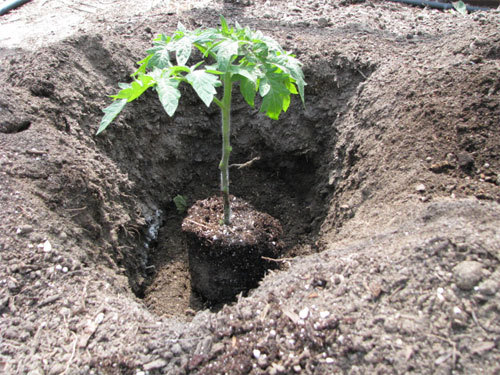
Determine where you will plant your tomato plants and how many plants your space can accommodate. There are several things to consider.
- First you want to plant them where the tomato family was not planted last year or even the year before, if possible. This is to avoid disease and pests that are waiting in the soil for another tomato plant family member (tomatoes, peppers, potatoes, eggplant) to be planted.
- Most of us purchase too many plants for the space we have. I suggest at least 3′ spacing from the nearest plant. That mean in a 3 square foot area, place one plant. If you have even 2 plants, especially cherry tomato plants, there will be more tomatoes than you can eat.
- Dig a hole with a hand trowel. Place a generous hand full of organic fertilizer in the hole, and mix the fertilizer into the soil using the hand trowel.
- Now, place a teaspoon of rock phosphate in the hole, and don’t mix it into the soil, for the roots of the tomato plant needs to touch the phosphate in order for the plant to benefit.
- Do not fertilizer again until you see the first fruit on the plant, and then don’t fertilize again, or you will have large lush plants and very few tomatoes.
- Push the soil back around the plant and firm the soil around it.
- Mulch around the plant with alfalfa hay, ground up leaves or pine needles (leaf grinder is in the big shed).
- Tomato plants do not like strong wind or temperatures below 45 degrees, so you could cover your plants at night with a 5 gallon bucket. Or you could use Walls of Water around the plant, or even build your tomato cage and wrap it with plastic or shade cloth or frost cloth, holding the plastic or cloth on with clothes pins.
- Once temperatures are a little warmer, the plastic or cloth can come off.