
|

Cover Crops

There are many places online (and in books) where you can read about crop rotation in depth, the whys and wherefores.
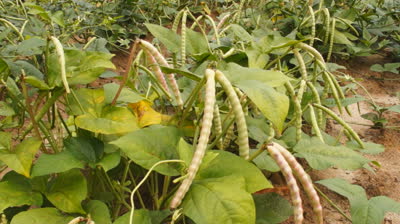
Black Crowder Peas
Black Crowder Peas are an excellent summer cover crop.

One thing to note is that the bean family can be used as a cover crop anywhere in the rotation when wanted or needed.

SUMMER: southern peas in the summer are a very effective cover crop, shading out weeds (if you start out with a weed-free bed) and potentially enriching the soil. They require a week or two’s attention at seeding time (late May or June) to get them established (regular watering til the seedlings are established), then they are fairly drought-free, requiring water when it stays very hot and dry for an extended period of time. Several beds at the WCG were successfully cover-cropped last summer with the Black Crowders (a southern pea).

WINTER: Elbon cereal rye is usually grown as a winter cover crop, as it is a root-knot nematode trap-crop. One of the WCG gardeners has been successfully growing fava beans as a winter crop. They are beautiful and just beginning to flower now.

Wishing our gardeners a bountiful vegetable and herb harvest this year!

Similar Posts

  • |

    An Open Letter From Bert and Diana Gonzalez

    Dear WCG members, We are so glad we decided to join this growing (literally and figuratively) organization!  We have found so many helpful, friendly, knowledgeable and generous Westbury residents through the 2 1/2 years we’ve been members.  What a great discovery for us.  It really does give both Bert and me a better sense of…

  • | |

    Black Rot Disease in Brassicas

    What is it? Black rot is a bacterial infection that affects the vascular system of members of the Brassica (broccoli) family. It is caused by the bacterium Xanthomonas campestris pv. campestris. Which plants are affected? All cruciferous crops are susceptible including arugula, bok choy, broccoli, Brussels sprouts, cabbage (including Chinese cabbage), cauliflower, collards, garden cress, kale, kohlrabi, mustard (including mizuna), radish, rutabaga, and turnip. NOT AFFECTED seems to be nasturtium (it must be far enough away on the family tree). Where did it come from? We don’t know the origin of our current outbreak. The bacterium infects all parts of host plants, including seeds, so it could have come in on a seed or on a commercial transplant. There are also some Brassica family weeds that can harbor it in the wild. Why is it such a problem now? We have had the perfect warm, humid weather for it to spread and multiply these past few months – temperature has been between 50-75,  it has been breezy and wet. It wasn’t until Wayne saw the same pattern on several of his plants that he brought it to Ray’s attention. We’ve probably been living with it for months without realizing it, which allowed it to spread widely. How is it spread?…

  • How Smart is ChatGPT?

    Surely you’ve heard about Artificial Intelligence apps writing term papers for students. Just how smart are they? A garden member asked ChatGPT two garden questions. Here are the questions and answers. Q: How to keep weeds down in a raised bed community garden? A: Keeping weeds under control in a raised bed community garden can…