
How To Make Decisions On What Vegetable Varieties To Grow
By Education Committee members, Wayne Slaiku and Ray Sher
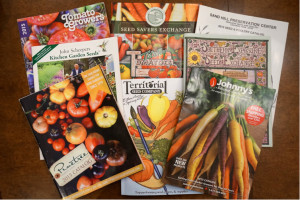
Figuring out what vegetable varieties to grow is a fun and interesting thing to do, but it takes a lot of time, and seed catalogs always make every variety sound good. To sift through the information, there are key things to look for, which makes decision making much easier.
All seed catalogs give descriptions of each variety, and some seed catalogs provide critical information in their descriptions. Following are general things to look for in the descriptions.
- Disease Resistance
- If in the description there are words like “excellent disease package”, “broad disease resistance and stress tolerance” or even ”intermediate resistance”, then this is a good variety to consider.
- If there is no mention of disease resistance, then this variety should not be grown, unless there is some other quality that makes it worth taking the chance.
- Productivity
- If the description say words like “high-yielding” or “outstanding yield”, then this is a good variety to consider.
- If listed as an “award winning variety” it is a good choice.
- If it says “good-yielder” or says nothing about yield, then you can pretty much count on it not being as good a yield as other varieties.
- Taste
- If the description says words like “outstanding taste” or “outstanding flavor”, then this would be a good variety to consider.
- If it says nothing about taste or “pleasant” taste, then you can pretty much count on the taste not being so good.
- Heat tolerance for spring vegetables
- If it says “good production even in heat of summer”, then this may be a variety that can produce later into the spring or early summer than other varieties. This is true with some green bean varieties.
- Size of plant
- Especially with tomatoes, there are “determinate” varieties that may only grow to a maximum of 4 feet and may not have to have a tomato cage, and “indeterminate” varieties that need a strong tall tomato cage for they may grow to 7 feet. There are also patio tomato plants that can be grown in a container without a cage.
- Bolt resistance
- Some varieties of vegetables bolt (go to seed) well before others. It is often caused by heat, and sometimes caused by the end of life coming early.
- If a description says “slow to bolt”, that is good, for the plant will produce over a longer period of time.
- Cracking
- Some varieties of tomatoes and cantaloupe tend to crack when we have a lot of rain, which happens at least a couple of times during the growing season.
- If a description says “slow to bolt”, that is good, for the plant will produce over a longer period of time.
- If a description says “slow to bolt”, that is good, for the plant will produce over a longer period of time.
- Days to maturity or harvest (also listed as early, mid or late season)
- The quicker the vegetables are ready to harvest the less chance they
will have to be attacked by destructive insects and diseases. For example, some cabbages are ready in 50 days and some in 100 days. Choose the 50 day variety. - Some longer maturing or late season varieties have better taste and thus are worth the risk.
- The quicker the vegetables are ready to harvest the less chance they
The following seed companies are the ones most used for the Houston area. If you see some varieties you like and order them, they will send you a catalog free every year.
- Johnny’s Selected Seeds – by far the most ordered from seed company for our area
- Territorial Seeds – an Oregon seed company with many great varieties
- Baker Creek Heirloom – all open pollinated seeds (you can save the seeds_
- Kitazawa Seeds – all the Asian vegetables