
Cover Crops for High Summer
Sweet potatoes are a wonderful and delicious cover crop, just the thing to plant when you don’t want to go out in the heat of summer and take care of the garden. Here at WCG, we are forced to take a pause on sweet potatoes this year, due to an outbreak of sweet potato weevils. To break the weevil’s life cycle, we can’t have sweet potatoes in the garden for a while. To accomplish this, we need all gardeners to remove any left-over sweet potatoes they find in their beds from previous plantings, as well as not planting sweet potatoes this summer.
Here are a couple of tried and true cover crops for the Houston area while we vanquish the sweet potato weevil.
BUCKWHEAT
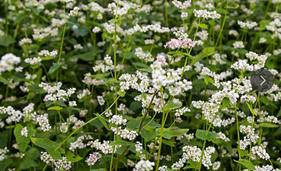
Urban Harvest has had good success using buckwheat. According to Urban Harvest, buckwheat is an excellent, fast-growing summer cover crop for Houston, thriving in heat and maturing in 35–40 days to suppress weeds, loosen heavy clay soil, and attract pollinators. It is ideal for filling gaps between spring and fall gardens, but it must be terminated by cutting or tilling before it goes to seed—usually within 10 days of flowering to avoid it becoming a weed itself.
Key Considerations for Houston:
- Timing: Plant from late spring through summer; it is frost-sensitive and will not survive winter.
- Growth: Grows rapidly, reaching 35 to 40 days for maturity, and can be easily turned into the soil for quick decomposition.
- Management: It requires moisture for germination but does not tolerate saturated soil.
- Sowing Rate: Broadcast at a rate of 1 lb of seed per 300 to 500 square feet.
Benefits of Buckwheat in Summer:
- Weed Suppression: Buckwheat germinates quickly, with a 6-week growth cycle that smothers weeds, making it ideal for the “summer dearth” when other plants struggle.
- Soil Improvement: Known for scavenging phosphorus and making it available to future crops.
- Pollinator Support: Produces white flowers that attract beneficial insects, including bees, which are beneficial for summer gardens.
- Easy Termination: It has a shallow, weak root system, making it easy to remove by tilling, mowing, or using a tarp to smother it.
Steps to Grow in Houston:
- Prepare the Soil: Lightly cultivate the soil.
- Sow the Seeds: Broadcast the seeds at the recommended rate.
- Cover the Seeds: Lightly rake the seeds into the soil, ideally keeping them less than 1 inch deep.
- Water: Water gently to maintain moisture for germination.
- Terminate: Mower or till before seed formation to prevent reseeding, usually around 4–6 weeks after planting.
Check out this video using buckwheat as a cover crop:
FIELD PEAS
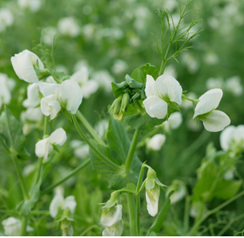
Southern peas (cowpeas) include popular varieties categorized into crowder, cream, and black-eyed types, with favorites like ‘Pinkeye Purplehull,’ ‘Big Red Ripper,’ and ‘Whippoorwill’ often grown for their heat tolerance and productivity. These nutritious, fast-growing legumes are staples for Southern gardens, offering delicious fresh shelling or dried options in 60-80 days
Popular Southern Pea Varieties
- Pinkeye Purplehull (e.g., Quickpick, BVR): Very popular, early-maturing, and highly productive with purple pods.
- Whippoorwill: A classic, hardy, vining heirloom with small brown seeds.
- Big Red Ripper: A, large-seeded, productive, and popular “old-fashioned” variety with long reddish-green pods.
- Lady: A highly regarded, small, delicate, cream-colored pea.
- Mississippi Silver: A, popular brown crowder type with large seeds.
- California Blackeye #5: A widely grown,, dependable, high-yielding variety.
- Zipper Cream: Known for being easy to shell, with large peas, and a mild flavor. [1, 2, 3, 4, 7]
Main Types of Southern Peas
- Crowder: Peas are packed tightly into the pod; they have a robust flavor and produce a dark, flavorful, thickened pot liquor. Examples: Big Red Ripper, Mississippi Silver.
- Cream: Mild and tender, these are generally the smallest and most delicate in flavor. Examples: Lady, Texas Cream.
- Black-eyed/Pinkeye: These are technically part of the cream group, but recognized for their dark eye color. They are less dense than crowders. [1, 2, 3, 4]
Growing Information
- Planting: Direct sow in late spring to mid-summer, after all danger of frost.
- Conditions: Thrives in full sun, heat, and tolerates poor soil.
- Growth Habit: Varieties can be bush, semi-vining, or vining (need trellising).
- Harvest: Pick when pods are fully filled out, before they turn completely brown if eating fresh.
Debbie Gordon has buckwheat and black eyed pea seeds available for interested gardeners.