
WCG Composting Programs
Composting is a simple way to add nutrient-rich humus which fuels plant growth and restores vitality to soils. It is also good for the environment and reduces landfill waste.
Presently, we have the “Tree Leaf” compost program located near the storage buildings. Candice and her committee will take your leaves that you bring from home and produce it into rich compost and then distribute to all of the gardeners.
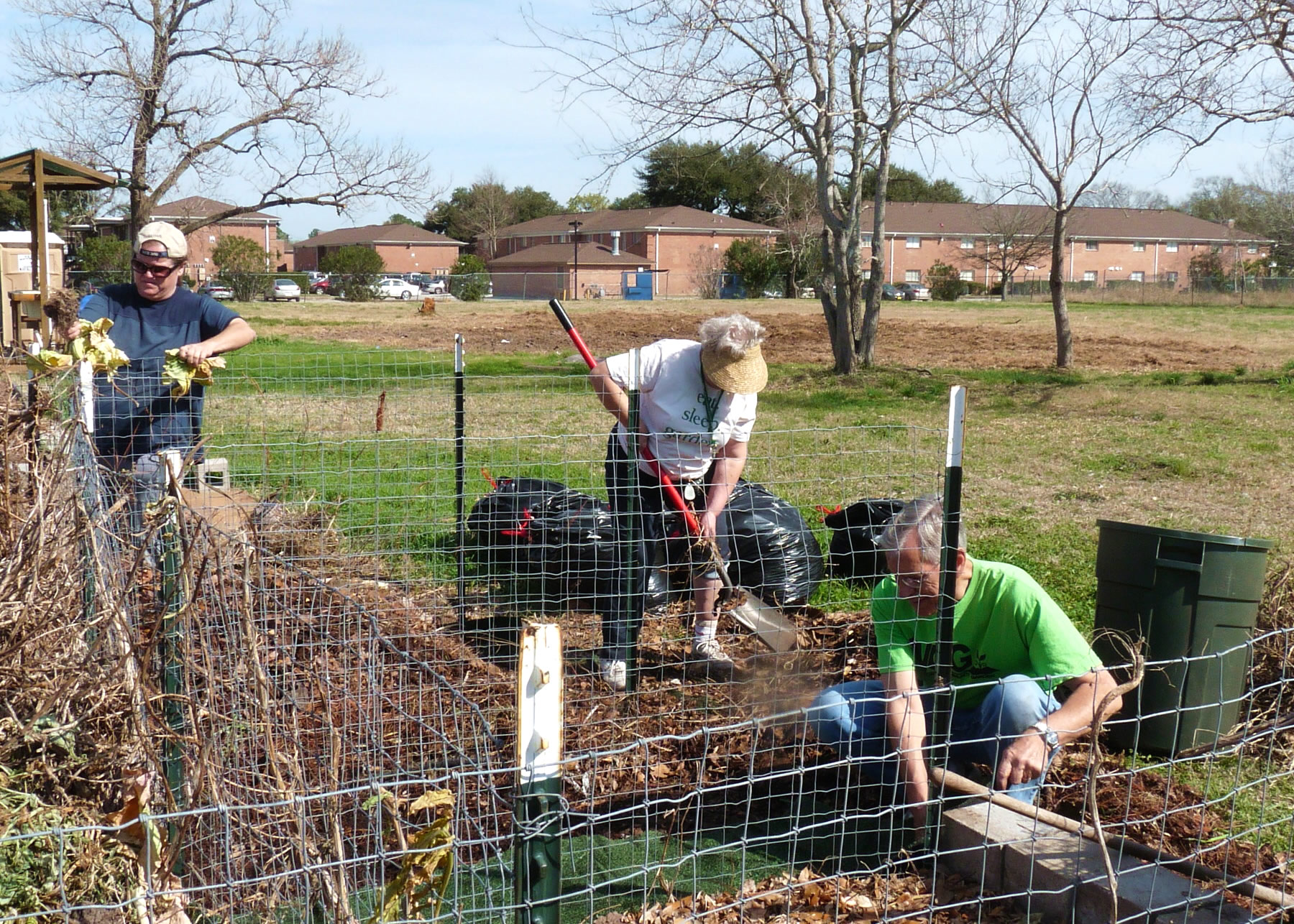
On the East side of the garden, a large bin was constructed to collect garden waste. This bin quickly filled and a better disposal method was needed. Candice, Hazel & I will use this area to start a “Garden Waste Compost”. The old accumulated waste will be slowly incorporated into the compost bins. We will use a “No-Turn” compost method.
Composting is the process used to speed decomposition of organic matter into humus. Because carbon is the main element of all plants, it is the goal of composting to encourage the growth of more bacteria to decompose the carbonaceous materials. Since the bacteria and microorganisms must have nitrogen to carry out the decomposition process, it is helpful to add some form of nitrogen (grass clippings, green leaves, kitchen waste, etc.) to the compost pile. A simple rule of thumb is to use 1/3 GREEN (nitrogen) and 2/3 BROWN (carbon) material. The bulkiness of the brown material allows for oxygen to penetrate and nourish the organisms. Bulky material from the garden (stalks of broccoli, brussel sprouts, cabbage, etc.) must be chopped into pieces 3 to 4 inches long or crushed. As you layer the material, thoroughly mix the pile and add water occasionally to keep the compost pile moist.
Simply put, this is What TO Do:
[unordered_list style=”bullet”]
- Add 1 to 2 inches of green material (cut into 3″ to 4″ pieces or smash)
- Then add 3″ to 4″ of brown material (bags of shredded leaves that will be provided or use the old material in the bin)
- Mix the pile
- Add water to keep pile moist–(this keeps the bacteria activated)
- Repeat
[/unordered_list]
What NOT To Do:
[unordered_list style=”bullet”]
- Do Not add tomato, squash or okra plants
- Do Not add weeds that have gone to see
- Do Not add diseased plants
- Do Not add shredded newspaper
- Do Not add LARGE plant roots (discard them in trash can)
- Do Not add meat and food products
[/unordered_list]
Plans are to have a small dumpster on site in the near future. This will enable gardeners to dispose of large and unwanted items that can not be used in the composting programs. If you have any questions you can contact Candice, Hazel or me. We hope this added compost program will help keep the garden neat and clean.