
| | |

Support For Plants

Some plants must be supported to be at maximum production. These plants are tomatoes, peppers, eggplant, cucumbers, long beans, pole beans, bitter melon, Malabar spinach.
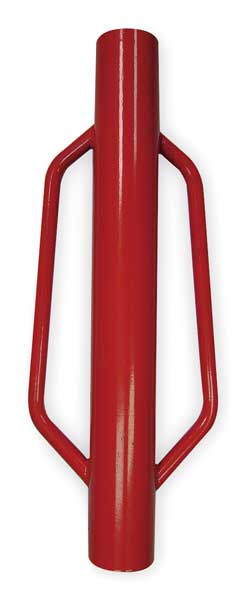
Fence Post DriverTools: The garden’s two handled fence post driver is in the small shed. (See photo.)

Trellises are for cucumbers, long beans, pole beans, bitter melon, Malabar spinach.

  1. Trellises can be made out of bamboo, a wooden stake structure, fence pole structure or any other method you might devise.
  2. However, the easy way to do it is to purchase 8’ steel T-stakes.  These can be purchased at Home Depot or Lowe’s in the fencing department.  Pound to stakes into the ground 18” deep and 6.5’ apart down the length of a bed and 1’ from the edge of one side of the bed.   The garden has a special fence post driver in the small shed.
  3. Then purchase concrete rebar mesh from Home Depot. This is a 3.5’ x 7’ flat metal mesh with 6” square holes. Wire the remesh to the metal poles. Stack one remesh on top of the lower one to make a 7’ high trellis that is 7’ long.
  4. Plastic zip ties, old electric wire(in small shed), or other wire is good for fastening.

Tomato cages

  1. Purchase two concrete remesh sheets.
  2. Bend each around to make a cylinder cage.
  3. Stack one cage on top of the other and wire together.
  4. Place the cage around the tomato plant, and hammer a T-stake into the ground next to the cage and tie the cage to it for stability.
  5. Firmly anchoring cages is important due to winds and weight of mature plant.

Eggplant cages

The same as tomato cages, but with only one layer of remesh needed, for the plants don’t get as tall as tomato plants.

Pepper cages

  1. Purchase the large size funnel-like tomato cages sold in nurseries and home improvement stores. Do not purchase the smaller size cage.
  2. These cages are good for pepper plants which do not get tall.
  3. Anchor these cages too with a stake of some sort.

Similar Posts

  • | |

    Mulberries!

    Our mulberry tree in the North 40 is loaded with berries right now. If you have a few minutes, take a small container to the garden and try some. Mulberries are the sweet, hanging fruit from a genus of deciduous trees that grow in a variety of temperate areas around the world. Thought to possibly…

  • |

    Summer Bounty: Figs

    One of the best sweet treats for summer are figs. At Westbury Community Garden we have four varieties of figs. They are Banana figs (large yellow), LSU Purple (purple, teardrop-shaped), Celeste (large, light purple/brown), Petite Negra (small dark purple/black, teardrop-shaped). There is an early harvest in May and the main harvest in June – August….

  • | |

    Spring and Summer Vegetable Gardening

    This seasonal class offers many tips and techniques to insure successful spring and summer vegetable production specifically for our Houston climate. Timing is everything! You don’t want to miss this important class! For those who need to look back at the information presented, the instructors have offered the presentation material here. The March 4th class…

  • | |

    Black Rot Disease in Brassicas

    What is it? Black rot is a bacterial infection that affects the vascular system of members of the Brassica (broccoli) family. It is caused by the bacterium Xanthomonas campestris pv. campestris. Which plants are affected? All cruciferous crops are susceptible including arugula, bok choy, broccoli, Brussels sprouts, cabbage (including Chinese cabbage), cauliflower, collards, garden cress, kale, kohlrabi, mustard (including mizuna), radish, rutabaga, and turnip. NOT AFFECTED seems to be nasturtium (it must be far enough away on the family tree). Where did it come from? We don’t know the origin of our current outbreak. The bacterium infects all parts of host plants, including seeds, so it could have come in on a seed or on a commercial transplant. There are also some Brassica family weeds that can harbor it in the wild. Why is it such a problem now? We have had the perfect warm, humid weather for it to spread and multiply these past few months – temperature has been between 50-75,  it has been breezy and wet. It wasn’t until Wayne saw the same pattern on several of his plants that he brought it to Ray’s attention. We’ve probably been living with it for months without realizing it, which allowed it to spread widely. How is it spread?…